

The U.S. infrastructure sector is at a defining moment. With aging assets, shifting policy priorities, rapid technological change, and growing community expectations, the time has come to reassess how the nation plans, funds, delivers, and maintains its vital systems. Recent trends suggest that far from being mired in decline, the American infrastructure landscape is evolving—and the pace of that transformation is accelerating.
U.S. infrastructure stereotypes are outdated
A central message emerging across the infrastructure lifecycle is the need to challenge outdated narratives. The U.S. is already leading in infrastructure innovation, from rapid tech adoption to booming public-private partnerships (PPPs or P3s), and it’s time our narrative caught up.
Long-held pessimism about U.S. infrastructure quality is being replaced by evidence of progress and innovation. Public-private partnerships are being deployed at scale, particularly in transit. New technologies, from digital twins to predictive maintenance, are being adopted faster than ever—and are world leading in many cases. So much so that the infrastructure market is outpacing the availability of labor and materials.
The opportunity now is to build on these strengths, setting ambitious goals to position the U.S. as a global leader in delivery and innovation.
Community focus is the starting point and not an optional extra
At the heart of this shift is the growing recognition that infrastructure must start and end with communities. In short, infrastructure works best when it puts communities first, embedding equity, opportunity, and local benefit into every stage of delivery.
Successful infrastructure doesn’t just serve technical needs, it serves people. Projects that embed local voices from the outset tend to be more equitable, more sustainable, and, ultimately, more resilient. Technologies such as digital twins are helping to not only inform communities but expedite the consultation process and provide communities with a lifelike understanding of how development will affect their communities.
A powerful example is the redevelopment of JFK International Airport, where over USD 950 million in contracts have been awarded to date to Queens-based businesses. This model shows how infrastructure can be a tool for local economic empowerment, not just mobility or capacity, while ensuring the participation, buy-in, and ownership of the project by the community where the project is based.

Governance isn’t sexy but it is key
The sector is also waking up to the quiet but critical importance of robust long-term governance being essential to unlocking investment and ensuring that infrastructure delivers lasting impact. While less headline-grabbing than construction cranes or federal budgets, governance structures determine how effectively public resources are deployed.
Compared to peers like the U.K., which is about to set out a 10-year infrastructure investment strategy, the U.S. still lacks consistent, long-term planning mechanisms. Creating dedicated infrastructure agencies, building bipartisan consensus, and offering investors greater policy stability are seen as essential reforms for unlocking private capital and ensuring that investments deliver long-term value.
The need for a maintenance revolution
Maintaining the nation’s existing infrastructure adds further complexity. Many U.S. cities are balancing the preservation of legacy assets with the demand for modern performance.
Innovative funding mechanisms, such as local sales tax initiatives, show how investment in people, training, and human-centered design can deliver social returns that ripple across generations. Infrastructure, in this light, becomes not just a public utility, but a catalyst for community resilience and economic vitality.
Safety, too, is taking on new urgency, particularly during the maintenance process. High-profile tragedies have highlighted the vulnerability of construction workers and infrastructure users alike. There is growing consensus around the need to embed a culture of safety across all projects, with clear standards, better protection for workers, and more rigorous oversight throughout the project lifecycle.
Partnership for successful financing
None of this can be achieved without robust, collaborative partnerships. The complexity of modern infrastructure means that successful delivery hinges on trust and coordination across vast networks of stakeholders, often numbering in the dozens.
Open communication channels, constructive dialogue, and shared goals are the glue that holds these coalitions together, particularly during moments of crisis or political uncertainty.
The sector is grappling with the need to modernize outdated policy and funding models. Initiatives such as the gas tax and the Highway Trust Fund, long the cornerstones of government infrastructure finance, are no longer sufficient. New solutions are being explored, including user-based fee structures and accelerated permitting processes supported by the deployment of technology. With growing bipartisan interest, there is cautious optimism that real reform could unlock a new era of sustained, adaptable infrastructure investment.
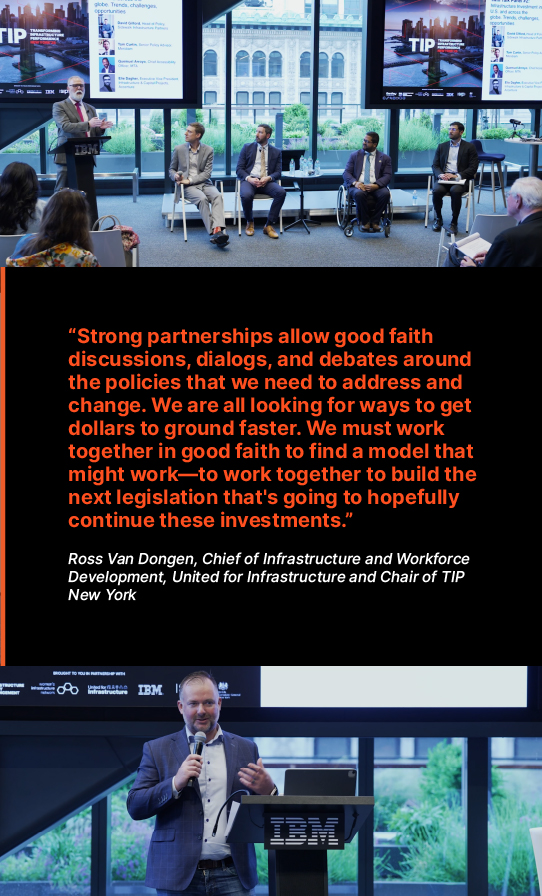
The future depends on bold vision, community-first thinking, smart governance, and powerful partnerships. As we learned at the Transforming Infrastructure Performance Summit in New York, with these principles in place, the infrastructure sector can rise to meet the demands of the 21st century—delivering lasting value for generations to come.

by Rory Linehan,
Director of Infrastructure
Policy Advancement,
Bentley Systems
The U.S. infrastructure sector is at a defining moment. With aging assets, shifting policy priorities, rapid technological change, and growing community expectations, the time has come to reassess how the nation plans, funds, delivers, and maintains its vital systems. Recent trends suggest that far from being mired in decline, the American infrastructure landscape is evolving—and the pace of that transformation is accelerating.
U.S. infrastructure stereotypes are outdated
A central message emerging across the infrastructure lifecycle is the need to challenge outdated narratives. The U.S. is already leading in infrastructure innovation, from rapid tech adoption to booming public-private partnerships (PPPs or P3s), and it’s time our narrative caught up.
Long-held pessimism about U.S. infrastructure quality is being replaced by evidence of progress and innovation. Public-private partnerships are being deployed at scale, particularly in transit. New technologies, from digital twins to predictive maintenance, are being adopted faster than ever—and are world leading in many cases. So much so that the infrastructure market is outpacing the availability of labor and materials.
The opportunity now is to build on these strengths, setting ambitious goals to position the U.S. as a global leader in delivery and innovation.
Community focus is the starting point and not an optional extra
At the heart of this shift is the growing recognition that infrastructure must start and end with communities. In short, infrastructure works best when it puts communities first, embedding equity, opportunity, and local benefit into every stage of delivery.
Successful infrastructure doesn’t just serve technical needs, it serves people. Projects that embed local voices from the outset tend to be more equitable, more sustainable, and, ultimately, more resilient. Technologies such as digital twins are helping to not only inform communities but expedite the consultation process and provide communities with a lifelike understanding of how development will affect their communities.
A powerful example is the redevelopment of JFK International Airport, where over USD 950 million in contracts have been awarded to date to Queens-based businesses. This model shows how infrastructure can be a tool for local economic empowerment, not just mobility or capacity, while ensuring the participation, buy-in, and ownership of the project by the community where the project is based.
Governance isn’t sexy but it is key
The sector is also waking up to the quiet but critical importance of robust long-term governance being essential to unlocking investment and ensuring that infrastructure delivers lasting impact. While less headline-grabbing than construction cranes or federal budgets, governance structures determine how effectively public resources are deployed.
Compared to peers like the U.K., which is about to set out a 10-year infrastructure investment strategy, the U.S. still lacks consistent, long-term planning mechanisms. Creating dedicated infrastructure agencies, building bipartisan consensus, and offering investors greater policy stability are seen as essential reforms for unlocking private capital and ensuring that investments deliver long-term value.
The need for a maintenance revolution
Maintaining the nation’s existing infrastructure adds further complexity. Many U.S. cities are balancing the preservation of legacy assets with the demand for modern performance.
Innovative funding mechanisms, such as local sales tax initiatives, show how investment in people, training, and human-centered design can deliver social returns that ripple across generations. Infrastructure, in this light, becomes not just a public utility, but a catalyst for community resilience and economic vitality.
Safety, too, is taking on new urgency, particularly during the maintenance process. High-profile tragedies have highlighted the vulnerability of construction workers and infrastructure users alike. There is growing consensus around the need to embed a culture of safety across all projects, with clear standards, better protection for workers, and more rigorous oversight throughout the project lifecycle.
Partnership for successful financing
None of this can be achieved without robust, collaborative partnerships. The complexity of modern infrastructure means that successful delivery hinges on trust and coordination across vast networks of stakeholders, often numbering in the dozens.
Open communication channels, constructive dialogue, and shared goals are the glue that holds these coalitions together, particularly during moments of crisis or political uncertainty.
The sector is grappling with the need to modernize outdated policy and funding models. Initiatives such as the gas tax and the Highway Trust Fund, long the cornerstones of government infrastructure finance, are no longer sufficient. New solutions are being explored, including user-based fee structures and accelerated permitting processes supported by the deployment of technology. With growing bipartisan interest, there is cautious optimism that real reform could unlock a new era of sustained, adaptable infrastructure investment.
The future depends on bold vision, community-first thinking, smart governance, and powerful partnerships. As we learned at the Transforming Infrastructure Performance Summit in New York, with these principles in place, the infrastructure sector can rise to meet the demands of the 21st century—delivering lasting value for generations to come.
Unlock the secrets to transforming infrastructure performance with the summit flipbook.
Dive into valuable insights on regional infrastructure trends, gain expert perspectives from this year’s inspiring speakers, and explore actionable strategies to enhance your project performance.
Access speaker session videos to hear directly from the inspiring voices that shaped this year’s discussions.
To express interest in attending TIP NYC 2026, please visit the registration page. Space is limited.