

Twin Talks NYC at Climate Week: Resilience in Action
by Rory Linehan,
Director of Infrastructure
Policy Advancement,
Bentley Systems
It was standing-room-only at AECOM’s Manhattan headquarters for Twin Talks NYC during Climate Week, and the message was unmistakable – resilience can’t wait. U.S. municipalities are already embedding it into every project, proving that climate action starts with infrastructure decisions made today.
Why focus on municipalities? Because they are on the front lines of resilience. As I highlighted in my opening remarks, State and local governments are the stewards of over 90% of public infrastructure assets, and while federal support plays a role, state and local governments shoulder 75% of the cost of maintaining and improving these assets. Decisions made at the city and state level determine whether communities withstand tomorrow’s climate and infrastructure challenges.
Phoenix Mayor Kate Gallego set the tone with humor and urgency. At 118°F, playground slides blister and children are forced indoors. The mayor’s call to “save recess” became the impromptu call to action for the day, underscoring the immediacy of the challenge and how resilience, infrastructure and our daily lives are intrinsically linked. Phoenix is already responding with investments to combat heat and water scarcity, including a U.S.-first Office of Heat Response and Mitigation. For mayors across the United States, climate action is local, immediate, and deeply human.
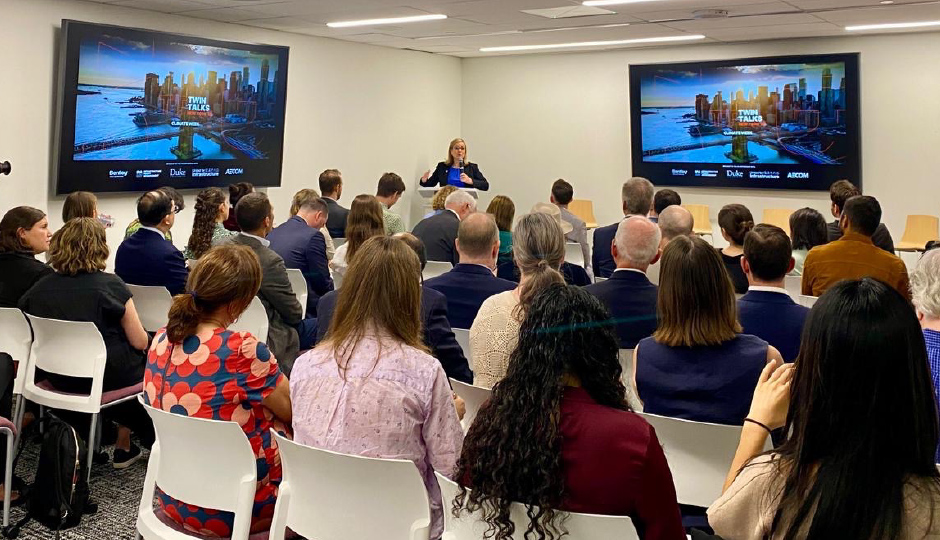
Save Recess! Mayor Gallego of Phoenix, AZ (the U.S.’ fifth largest city) addresses the Twin Talks NYC audience at AECOM’s NYC headquarters
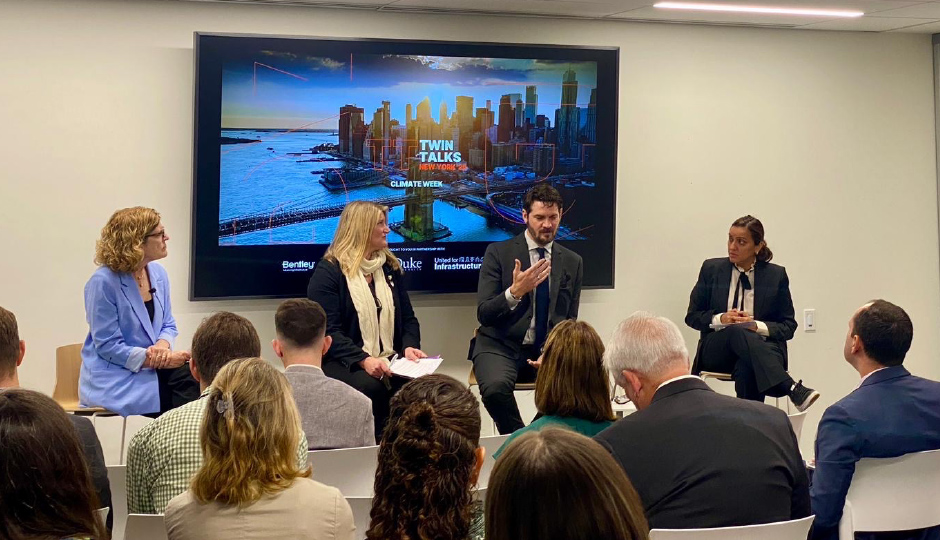
Left to Right: Moderator Elizabeth Losos and panelists Jennifer Goupil, Nick Novelli, and Sadia Juneja explore how U.S. municipalities are embedding resilience into infrastructure with the assistance of modern technology such as digital twins.
Our conversation was guided by Elizabeth Losos, chair of the Chapel Hill Planning Commission and executive in residence at Duke University, who brought both academic depth and the perspective of a small municipality to the discussion. Elizabeth steered the dialogue toward what resilience means in practice: how cities, agencies, and engineers translate climate challenges into infrastructure decisions that deliver for citizens.
Sadia Janjua, chief digital transformation officer at the Port Authority of New York and New Jersey, emphasized a systems-wide approach: “It’s all one network.” From PATH tunnels vulnerable to extreme heat to autonomous vehicle pilots at airports, the Port Authority is using digital twins and predictive maintenance to keep systems running, accelerate its net-zero 2030 roadmap, and ensure continuity of service, no matter the condition. Her message was clear: data must shine. Without clean, connected data, even the best technology remains shelfware.
Nick Novelli, high performance building specialist at AECOM, reminded us that resilience starts with project-level expectations. From Lower Manhattan flood risks to national guidelines, resilience targets must be translated into design, checked throughout delivery, and revisited at completion. His takeaway for practitioners: digitize your data, mine it, and use AI and context to make smart, resilient choices, especially when budgets are tight.
Jennifer Goupil, chief resilience officer at the American Society of Civil Engineers (ASCE), encouraged us to look at infrastructure in a new light. “We need to treat our infrastructure like we treat our homes,” she urged. With the right guidelines, toolkits, and standards, even small towns like Chapel Hill can benchmark system performance, identify gaps, and prioritize upgrades. Aligning who pays with who receives benefits is central to these efforts and ASCE’s work on resilience standards is helping close this gap.
The discussion turned practical to breaking down siloes, aligning standards with state DOTs, developing carbon assessment standards, and rethinking procurement to prioritize resilience. The consensus? The taxonomy and harmonization for infrastructure standards need to be accelerated to achieve the scale of investments required for system-wide resiliency. Universities, engineers, and agencies all have a role to play in educating, developing expertise, and embedding resilience into procurement and capital scoring models.
Ross van Dongen, executive director at United for Infrastructure, closed with a powerful call to invest boldly and keep resilience at the center of infrastructure decisions.
Takeaways
For municipal leaders and practitioners, three clear lessons emerged:
- Resilience is systemic: Infrastructure is a system of systems—water, energy, transit, housing—and must be planned, delivered, operated and funded as such.
- Data is the backbone. Without high quality, accessible, and interoperable data, technology cannot deliver resilience at the pace and scale required.
- Budgets are tight, so priorities must be sharper. Use data to target investments, adopt standards to reduce risk, and ensure procurement rewards resilience.
Continuing the work
This Twin Talk was part of our Built to Endure initiative, a forthcoming Smart Guide designed to support decision-makers embedding systemic resilience into practice. Subscribe to my LinkedIn newsletter, The Griffin Dispatch, to stay updated on the release.
The Transforming Infrastructure Performance Summit is coming back to NYC on April 16. You can register your interest to attend here. Please register early to avoid disappointment – seats are strictly limited.
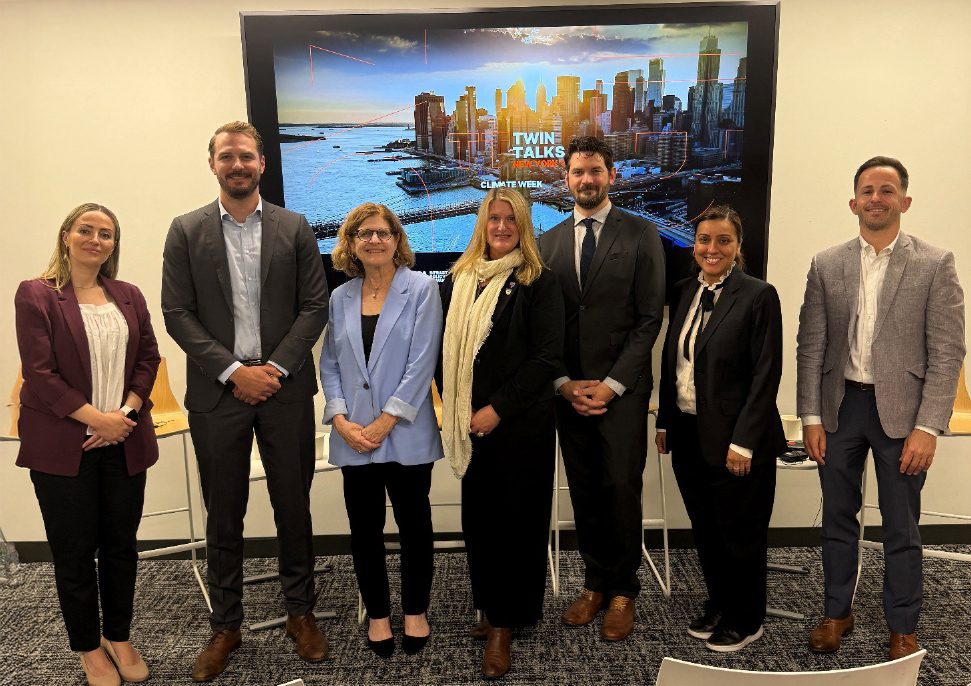
Lindsay O’Leary (Managing Director of Grants and Business Development, American Society of Civil Engineers) previews their new documentary “Cities of the Future”.